
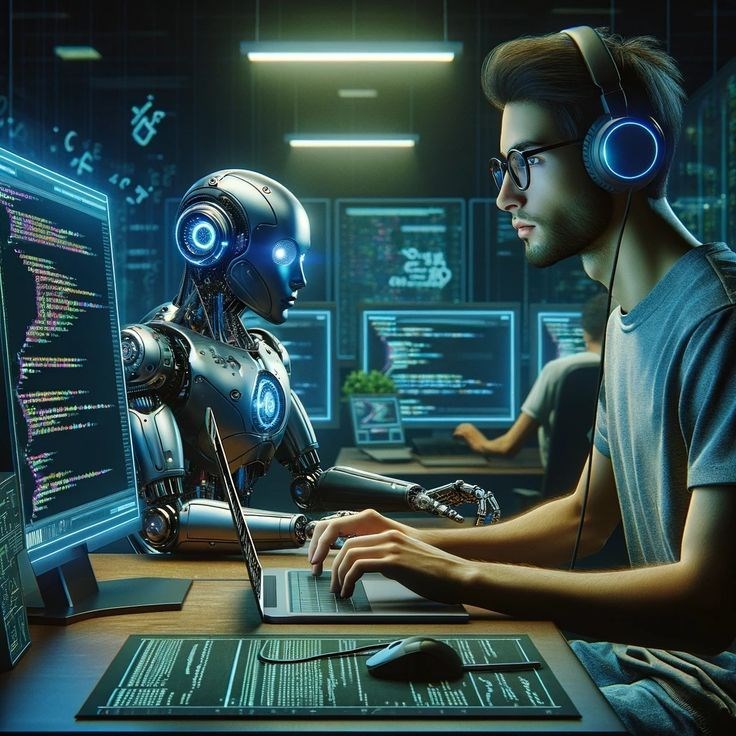
AI has been a trending topic of discussion, and the technological sector is not an exception either. The nature of the debate is whether or not entry-level programming jobs are being eliminated by AI. Whereas a product like GitHub Copilot and ChatGPT are now automating most low-level coding tasks, the reality is bleaker. It seems like a good idea for us to discuss whether or not Artificial Intelligence poses a threat to entry-level programmers or is creating new and more opportunities for them.
Automation of Repetitive Tasks
Machine learning algorithms have also become significant in coding, with different mundane functions like debugging, code generation, and testing being handled by the bots. This makes it possible for the system to handle tasks that were hitherto executed by entry-level programmers in an automated manner. Except for this, it increases the efficiency of working by quelling doubts over the reliability of junior occupations. Nevertheless, all these tools call for supervision, which means that narrowing down the options and responsibilities of entry-level programmers is the way to go.
Shift in Skill Requirements
The trend of the demand for entry-level programmers is shifting but it is not going away. The industry is now being challenged to focus on the need to teach such skills as problem-solving, critical thinking, and knowledge of AI tools. Today’s new entrants in the programming profession are expected to work in conjunction with AI, including using AI to increase efficiency. This shift leads to the need for people to upgrade their skills, for the new employees will have to compete with several AI-engineered processes.
Increased Accessibility to Programming
AI is making programming accessible to non-technical people which makes it easier to implement. Integrated software applications that include low-code platforms and AI coding are making it possible for people who do not know the technicalities of coding to devise applications. It will, however, lower the demand for conventional junior programmers but provide opportunities for discoverers who will find ways to incorporate AI into their work. Thus paradigm shift means that programmers’ role is not diminishing, but rather is evolving to include a catalytic player, or even an assistant through the utilization of artificial intelligence.
Job Market Dynamics
AI has already infiltrated the job ecosystem and is therefore affecting how people search for employment nowadays. Some of the jobs at the junior level may deteriorate but new jobs in training AI models, in optimizing them, and in the further ethical development of AI are being created. There is high demand for talented programmers who can understand the demands of the business side and incorporate them into an AI system. It is a sign of flexibility since an entry-level programmer must develop his or her skills to meet the emerging trends within the industry.
Long-Term Impact on Programming Careers
Artificial Intelligence is not destroying programming jobs but is shifting them. Entry-level programmers, as we know them today, who perceive AI not as a threat but as an ally will easily find their place in this new world. It is gradually moving from coding to developing wise systems and solving problems creatively. With the help of AI, it will remain possible to see that programmers who learn how to develop new ideas and incorporate AI into their work perspectives in the future will be in great demand.
Conclusion
The issue that AI is taking the entry-level programming job vacancies is half true and exaggerated. AI is currently changing jobs and the skills needed for these jobs, it is also opening up possibilities for those willing to embrace it. Apprentice programmers should advance their knowledge, regard AI as a facilitative technology, and familiarize themselves with the tendencies in the field. Instead of displacing jobs, what we are seeing here is a reconfiguration of the jobs, signifying the beginning of the era of new programming.


Leave Comment